
Sindh Heritage Guide
Top Attractions in Sindh for History Lovers
A history-focused guide to Sindh’s most important attractions, from Mohenjo-Daro and Banbhore to Makli Necropolis, Shah Jahan Mosque, Ranikot Fort, Kot Diji, Sehwan Sharif, Bhit Shah, Hala, Thatta, Hyderabad, Sukkur, Manchar Lake and the Thar Desert.
top-attractions-in-sindh-for-history-lovers-hero.webp
Shot: Cinematic Sindh heritage collage with Mohenjo-Daro ruins, Makli Necropolis tombs, Shah Jahan Mosque blue tilework, Ranikot Fort walls, Sehwan shrine atmosphere, Thar Desert and Indus River landscape.
Alt: "Top attractions in Sindh for history lovers including Mohenjo-Daro Makli Shah Jahan Mosque Ranikot Fort and Sufi shrines"
Specs: 1920×1080 (16:9) · WebP · fetchpriority="high"
Sindh Is a Living Archive
If history fascinates you not as dates but as lived memory, Sindh does something rare.
It doesn’t isolate the past behind museum glass.
It lets it exist in the open.
Here, ruins sit beside villages, shrines pulse with music instead of silence, and cities carry centuries of continuity without trying to explain themselves. You don’t “visit” Sindh’s history so much as you move through it, often without realizing when one era ends and another begins.
This is why Sindh feels different from other heritage regions in Pakistan. It isn’t about one golden age. It’s about five thousand years of uninterrupted human presence, layered rather than replaced.
For history lovers — students, researchers, architects, cultural travelers — Sindh isn’t just a destination. It’s a living archive.
The Snapshot
Best Historical Attractions in Sindh at a Glance
Sindh is one of Pakistan’s richest regions for history-focused travel because it connects early urban civilization, Islamic heritage, Sufi spirituality, defensive architecture, historic cities and landscapes shaped by the Indus River and desert routes.
Ancient Civilization
Mohenjo-Daro and Banbhore show Sindh’s deep archaeological roots, from the Indus Valley Civilization to early trade and Islamic transition.
UNESCO Heritage
Makli Necropolis and Mohenjo-Daro connect Sindh to global human history through urban planning, funerary architecture and centuries of continuity.
Mosque Architecture
Shah Jahan Mosque in Thatta is one of Pakistan’s finest examples of Mughal architecture adapted through Sindhi craft, acoustics and blue tilework.
Forts & Defense
Ranikot Fort and Kot Diji Fort explain how Sindh’s rulers used geography, hills, routes and elevation to defend movement and influence.
Living Spirituality
Sehwan Sharif, Bhit Shah and Hala show history as something still practiced through music, poetry, devotion, Ajrak, pottery and inherited craft.
Best Season
October to March is the best time to explore Sindh’s historical sites, especially open landscapes like Makli, Mohenjo-Daro, Ranikot and Thar.
- Why Sindh is a treasure trove of history
- Ancient civilizations of Sindh
- UNESCO World Heritage sites in Sindh
- Forts that shaped Sindh’s defensive history
- Sufi shrines and spiritual heritage
- Historic cities of Sindh
- Natural landscapes with historical context
- Best time to explore historical sites in Sindh
- History-focused FAQs
Why Sindh Is a Treasure Trove of History
Sindh’s importance begins long before recorded empires.
This region was home to the Indus Valley Civilization, one of the world’s earliest urban societies. Long before Rome, before classical Greece, cities here were planned, drained, and governed with striking sophistication. And unlike many ancient civilizations, Sindh didn’t disappear after its first rise.
It adapted.
Buddhist influence left behind monasteries and learning centers. Early Islamic rulers turned Sindh into a gateway between Arabia and South Asia. Sufi saints reshaped spirituality into something local and human. Mughal emperors added architectural refinement without erasing what came before. Even British colonial engineering left marks that still function today.
That continuity answers one of the most common questions people ask:
What is the most famous thing about Sindh?
The answer isn’t a monument.
It’s historical depth.
Sindh also quietly answers another broad question:
What are the famous historical places in Pakistan?
Because many of Pakistan’s most globally significant heritage sites — from Indus Valley ruins to UNESCO-listed necropolises — exist here, often without the crowds that surround similar sites elsewhere in the world.
Ancient Civilizations of Sindh
Sindh’s ancient sites are not only old. They force travelers to rethink how early societies worked, traded, governed and survived across river systems, ports and changing landscapes.
Mohenjo-Daro – Where Urban Life Took Shape
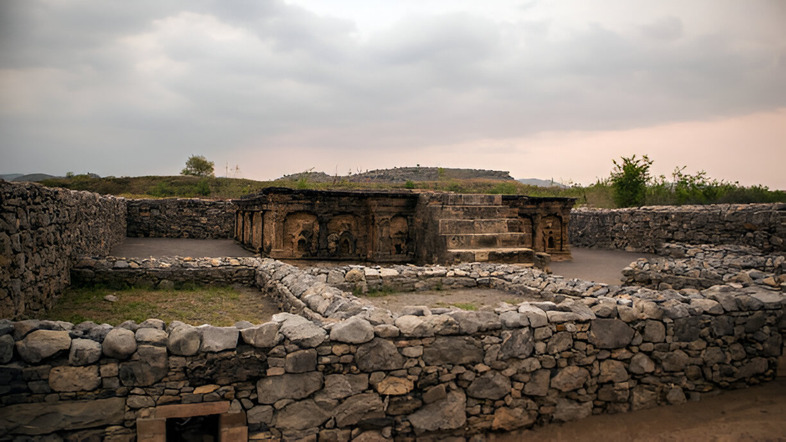
mohenjo-daro-top-historical-attraction-sindh.webp
Shot: Mohenjo-Daro ancient brick streets, stupa mound, Indus Valley ruins and planned city layout under warm Sindh morning light.
Alt: "Mohenjo-Daro top historical attraction in Sindh for history lovers"
Specs: 1200×900 (4:3) · WebP
There are ancient cities you admire.
And then there are ancient cities that quietly unsettle you.
Mohenjo-Daro belongs to the second kind.
Dating back more than 4,500 years, Mohenjo-Daro was not a primitive settlement. It was a planned city. Streets followed a grid system. Homes had private wells. Drainage systems ran beneath walkways. Public spaces were designed with intent, not accident.
The famous Great Bath remains one of archaeology’s enduring mysteries. Whether it served ritual, social, or civic functions, its construction alone shows an advanced understanding of water management and communal life.
This site answers two questions directly and powerfully:
What is the ancient city of Sindh?
Which is the oldest city in Sindh?
But Mohenjo-Daro does more than answer questions.
It forces a realization.
Modern urban life often feels chaotic by comparison.
Banbhore – Sindh’s Forgotten Port of Transition
banbhore-sindh-ancient-port-history.webp
Shot: Banbhore archaeological ruins in Sindh with old port walls, open landscape, weathered stone and early Islamic trade route atmosphere.
Alt: "Banbhore ancient port in Sindh showing early Islamic and Indian Ocean trade history"
Specs: 1200×900 (4:3) · WebP
Not all history in Sindh is monumental.
Some of it is quiet, fragmented, and easy to miss — like Banbhore.
Once an important port city, Banbhore connected Sindh to early Arab trade routes and the wider Indian Ocean world. Archaeological evidence suggests it played a role during the early Islamic period, making it one of the region’s most important transitional sites.
Banbhore doesn’t impress through scale.
It impresses through context.
Standing there, you can trace the shift from pre-Islamic Sindh to a region gradually integrating into the Muslim world — not through conquest alone, but through commerce, exchange, and movement.
For history lovers interested in process rather than spectacle, Banbhore matters deeply.
UNESCO World Heritage Sites in Sindh – Where History Becomes Global
Some places don’t just belong to a country.
They belong to human history as a whole.
Sindh has places that tell very different stories. One speaks through silence and scale. Another speaks through sound, science, and restraint. Together, they explain why Sindh’s heritage isn’t only local or regional — it’s global.
Makli Necropolis – A City of the Dead That Refuses to Feel Empty
makli-necropolis-top-attraction-sindh-history.webp
Shot: Makli Necropolis in Thatta with carved tombs, sandstone structures, rolling hills, faded inscriptions and open Sindh sky.
Alt: "Makli Necropolis in Thatta as one of the top historical attractions in Sindh"
Specs: 1200×900 (4:3) · WebP
You don’t arrive at Makli Necropolis expecting it to feel alive.
And yet, that’s exactly what unsettles you.
Stretching over several square kilometers near Thatta, Makli is considered the largest graveyard in the world. Tombs built between the 14th and 18th centuries rise and collapse across hills, some elaborate, some barely standing, all exposed to weather and time.
This is not a cemetery you walk through quickly.
Rulers, saints, scholars, generals, and poets are buried here, but the site doesn’t separate them cleanly. Dynasties overlap. Styles collide. Stone carvings borrow from Islamic geometry, Hindu motifs, Persian elegance, and local craftsmanship. The result feels less like a curated site and more like an honest record of centuries layered on top of each other.
What makes Makli historically powerful is not just who is buried there, but how history is allowed to erode naturally. No attempt is made to freeze it in perfection. Cracks remain. Walls lean. Inscriptions fade.
That authenticity answers a broad question almost accidentally:
What is the most famous historical place in Pakistan?
Makli doesn’t shout for that title.
It simply earns it through scale, continuity, and truth.
For history lovers, Makli offers something rare — a place where political history, spiritual authority, and artistic evolution exist together without hierarchy.
Shah Jahan Mosque – Mughal Architecture That Thinks Before It Impresses
shah-jahan-mosque-thatta-history-lovers-sindh.webp
Shot: Shah Jahan Mosque Thatta with blue glazed tilework, brick domes, arches, courtyard and acoustic prayer hall details.
Alt: "Shah Jahan Mosque Thatta Mughal architecture and blue tilework in Sindh"
Specs: 1200×900 (4:3) · WebP
If Makli represents history through accumulation, Shah Jahan Mosque represents history through intention.
Built in 1647 during the reign of Emperor Shah Jahan, this mosque stands apart from nearly every other Mughal religious structure in South Asia. It does not rely on marble. It does not dominate the skyline. It does not announce imperial power.
Instead, it solves problems.
The mosque is built entirely of brick and covered in intricate blue glazed tiles, a choice influenced by local Sindhi craftsmanship rather than imperial luxury. Its most remarkable feature, however, cannot be photographed easily — its acoustics.
With ninety-three domes carefully shaped and positioned, sound travels across the prayer hall with extraordinary clarity. A low voice carries without effort. No amplification is required. In an era before microphones, this mattered deeply, and the solution was architectural rather than mechanical.
This mosque answers multiple questions naturally:
What is the architecture of Shah Jahan Mosque?
What was Shah Jahan’s architectural style?
The honest answer is that Shah Jahan’s style here was adaptive. He allowed local materials, climate, and community needs to shape the design, resulting in one of the most intellectually refined mosques in Pakistan.
For architecture students and heritage travelers, this site often leaves a deeper impression than far more famous Mughal monuments.
Why Makli and Shah Jahan Mosque Matter Together
Makli Shows
- How history accumulates without control.
- Centuries of tombs, dynasties, saints and artistic evolution.
- A vast, chaotic and unfinished record of power, memory and mortality.
Shah Jahan Mosque Shows
- How history can be shaped deliberately.
- Precision, balance, acoustics and community-focused architecture.
- Mughal vision executed through Sindhi material, craft and climate awareness.
Makli and Shah Jahan Mosque sit close to each other geographically, but they represent opposite ends of historical expression.
One is vast, chaotic, and unfinished.
The other is precise, balanced, and complete.
Together, they form a foundation for understanding Sindh — a region where power, faith, art, and community evolved side by side rather than in isolation.
By the time you leave Thatta, one thing becomes clear:
Sindh’s history is not about singular greatness.
It’s about continuity.
Forts That Shaped Sindh’s Defensive History
Sindh’s history wasn’t shaped only by cities and saints.
It was also shaped by walls, hills, and distance.
Unlike regions where forts cluster tightly around capitals, Sindh’s forts are spread wide across harsh landscapes. That spread tells its own story. Power here wasn’t centralized easily. It had to be guarded, negotiated, and often rebuilt.
Two forts, in particular, explain this defensive logic better than any textbook ever could.
Ranikot Fort – Scale as Strategy
ranikot-fort-sindh-history-lovers.webp
Shot: Ranikot Fort walls stretching across hills and ridges in Sindh, with vast defensive landscape and dramatic scale.
Alt: "Ranikot Fort in Sindh showing massive defensive walls across hills for history lovers"
Specs: 1200×900 (4:3) · WebP
It’s impossible to understand Ranikot Fort quickly.
The first reaction most people have isn’t awe — it’s confusion. The walls stretch far beyond what the eye expects. They don’t enclose a city neatly. They sprawl across hills, valleys, and ridges as if the landscape itself were drafted into the defense plan.
Often described as the world’s largest fort by circumference, Ranikot’s true power lies not just in size, but in uncertainty. Historians still debate its origins. Was it built by local rulers? Expanded by the Talpurs? Reinforced over centuries by multiple powers? The fort doesn’t answer clearly — and that ambiguity is part of its story.
Ranikot wasn’t about controlling population centers.
It was about controlling movement.
From its vantage points, entire routes through the Kirthar range come into view. Anyone passing through the region could be seen long before arrival. In a land where armies, traders, and invaders all moved along predictable paths, this mattered more than decorative strength.
For history lovers, Ranikot reveals how Sindh adapted to geography rather than overpowering it. The fort doesn’t dominate the hills. It follows them.
Kot Diji Fort – Where Defense Meets Prehistory
kot-diji-fort-khairpur-sindh-prehistory.webp
Shot: Kot Diji Fort near Khairpur on a hill with defensive walls, surrounding plains and archaeological prehistory context.
Alt: "Kot Diji Fort near Khairpur Sindh where defensive history meets Indus Valley prehistory"
Specs: 1200×900 (4:3) · WebP
If Ranikot represents scale, Kot Diji Fort represents continuity.
Perched on a hill near Khairpur, Kot Diji Fort dates to the late 18th century, built by the Talpur rulers. But what makes this site exceptional isn’t the fort itself — it’s what lies beneath it.
Below the fort are archaeological remains from the Kot Diji culture, an early phase of the Indus Valley Civilization that predates Mohenjo-Daro. This means the same location served human settlement, defense, and governance across thousands of years.
Standing there, you’re not just looking at a fort.
You’re standing on layers of decision-making.
The choice to build here wasn’t symbolic. The elevation offers clear views of the surrounding plains and trade routes. Control of this point meant influence over movement, commerce, and security — the same priorities that guided settlement here long before the Talpurs arrived.
Kot Diji quietly answers another broad question:
How many historical places are in Sindh?
Enough that some sites contain multiple histories stacked vertically, not just horizontally across maps.
Why Forts Matter in Sindh’s Story
In many regions, forts represent moments of crisis — a response to invasion or instability. In Sindh, they represent something deeper: an understanding that survival depended on reading the land correctly.
Sindh’s rivers shift. Deserts expand and contract. Trade routes move. Political centers rise and fall.
The forts here weren’t designed for permanence.
They were designed for adaptation.
That philosophy mirrors Sindh’s broader historical pattern. Civilizations here didn’t disappear suddenly. They transformed, relocated, or merged into what came next.
By the time you finish exploring Sindh’s forts, you realize they’re not isolated military relics. They’re part of a continuous negotiation between people and place.
Sufi Shrines & Spiritual Heritage – Where History Is Still Practiced
Sindh’s history didn’t survive only because it was written down or carved into stone.
It survived because people kept living it.
When political power shifted and cities lost prominence, spiritual centers remained active. Shrines didn’t freeze in time the way forts did. They adapted, absorbed new generations, and kept cultural memory alive when formal institutions faded.
To understand Sindh fully, you have to step into this living layer of history.
Sehwan Sharif – A Center of Devotion That Never Closed
sehwan-sharif-lal-shahbaz-qalandar-sindh.webp
Shot: Sehwan Sharif shrine atmosphere with Lal Shahbaz Qalandar devotees, Sufi music, courtyard movement and Sindh spiritual heritage.
Alt: "Sehwan Sharif shrine of Lal Shahbaz Qalandar showing living Sufi heritage in Sindh"
Specs: 1200×900 (4:3) · WebP
Few places in South Asia feel as continuously alive as Sehwan Sharif.
For centuries, pilgrims have traveled here to visit the shrine of Lal Shahbaz Qalandar. Empires rose and fell, but Sehwan never stopped receiving people. That continuity alone makes it historically significant.
What’s striking is how little the experience has been formalized. Devotion here is expressive rather than structured. Music, movement, prayer, and emotion coexist without rigid boundaries. The famous dhamal — a rhythmic devotional dance — isn’t staged for visitors. It happens because people feel compelled to move.
For history lovers, Sehwan offers something documents can’t: a sense of how spiritual traditions preserve memory. The shrine connects modern visitors directly to centuries-old devotional practices that were never interrupted, even during political instability.
This isn’t history you observe from a distance.
It’s history that surrounds you.
Bhit Shah & Hala – Poetry, Craft, and Cultural Continuity
bhit-shah-hala-poetry-craft-sindh.webp
Shot: Bhit Shah shrine and Hala craft scene with Ajrak, pottery, handwoven textiles and Sindhi Sufi cultural atmosphere.
Alt: "Bhit Shah and Hala in Sindh showing Sufi poetry craft and cultural continuity"
Specs: 1200×900 (4:3) · WebP
If Sehwan represents intensity, Bhit Shah represents reflection.
Bhit Shah is associated with Shah Abdul Latif Bhittai, one of Sindh’s most influential Sufi poets. His verses weren’t confined to elite circles. They entered daily life, sung in gatherings and passed down orally across generations.
What makes Bhit Shah historically important isn’t just the shrine — it’s the ecosystem around it. Music, storytelling, and craftsmanship all orbit the same spiritual core.
Nearby Hala extends this legacy into material culture. Ajrak printing, pottery, and handwoven textiles aren’t treated as souvenirs here. They’re treated as skills inherited rather than invented.
For history lovers, this pairing explains how Sindh preserved identity without relying solely on institutions. Poetry became a memory. Craft became a record. The community became an archive.
Historic Cities of Sindh – Where Power, Trade, and Learning Converged
Cities tell history differently than monuments.
They reveal what people valued daily, not just ceremonially. Sindh’s historic cities weren’t built around single rulers or moments. They evolved slowly, often changing roles without losing relevance.
Thatta – A Capital That Refuses to Disappear
thatta-historic-city-sindh-capital.webp
Shot: Historic Thatta city with old streets, mosque domes, local markets, heritage buildings and Sindh capital history atmosphere.
Alt: "Thatta historic city in Sindh once a capital and center of learning"
Specs: 1200×900 (4:3) · WebP
Thatta appears quiet today, but historically it was anything but.
For centuries, Thatta served as a capital, a port, and a center of learning. Scholars, merchants, and rulers passed through its streets. The city supported mosques, madrasas, tombs, and markets long before modern urban centers rose elsewhere.
What makes Thatta unique is density. Few places in Pakistan contain so many significant heritage sites within such a compact area. Makli Necropolis, Shah Jahan Mosque, and older urban remnants coexist without clear separation.
Thatta doesn’t present history neatly.
It lets it overlap.
For researchers and cultural travelers, this makes the city invaluable. It allows multiple eras to be studied side by side, rather than as isolated case studies.
Hyderabad – Politics After Empires
If Thatta represents medieval Sindh, Hyderabad represents the period that followed.
Under the Kalhora and Talpur dynasties, Hyderabad emerged as a political and administrative center. Fortifications like Pakka Qila and surrounding tomb complexes reflect a shift from imperial ambition to regional governance.
This context answers a recurring curiosity: which city is called the Paris of Sindh?
The answer often points to Hyderabad, not because of romance or architecture alone, but because of its cultural vibrancy during its peak.
Hyderabad’s significance lies in transition. It shows how Sindh adapted after Mughal decline, maintaining autonomy without losing cultural depth.
Sukkur – Engineering, Faith, and the River
Sukkur tells a different story altogether.
Here, history flows with the Indus River. Colonial engineering projects like the Lansdowne Bridge sit alongside spiritual landmarks such as the Tomb of Seven Sisters. British infrastructure didn’t erase local belief systems; it existed alongside them.
Sukkur matters historically because it demonstrates coexistence rather than replacement. The river remained central. Trade continued. Faith adapted.
For history lovers, Sukkur shows how external influence entered Sindh without completely redefining it.
Natural Landscapes With Historical Context – When Geography Becomes Memory
Sindh’s history doesn’t live only in stone.
It lives in water routes, desert paths, and landscapes that shaped how people moved, settled, and survived. Ignoring this layer makes Sindh’s past feel incomplete, because geography here was never passive — it actively directed civilization.
Manchar Lake – History That Floats
manchar-lake-sindh-history-water-routes.webp
Shot: Manchar Lake in Sindh with fishing boats, lakeside communities, water routes and historical landscape atmosphere.
Alt: "Manchar Lake in Sindh showing historical water routes fishing communities and living landscape"
Specs: 1200×900 (4:3) · WebP
Manchar Lake is often described as South Asia’s largest freshwater lake, but that description misses its real significance.
For centuries, communities settled along its edges, building lives around fishing, seasonal movement, and river-fed agriculture. The lake acted as a stabilizer in an otherwise unpredictable environment. When the Indus shifted, Manchar absorbed impact. When droughts hit, it sustained livelihoods.
What makes Manchar historically important isn’t monumental architecture — it’s continuity. Fishing techniques, boat designs, and settlement patterns persisted here long after political control shifted elsewhere.
For history lovers, Manchar represents the everyday life that supported grander civilizations. Empires depend on people who eat, trade, and move water — and Manchar quietly made that possible.
Thar Desert – A Living Historical Landscape
thar-desert-sindh-living-historical-landscape.webp
Shot: Thar Desert in Sindh with village life, dunes, colorful clothing, camel routes, Nagarparkar hills and historic desert landscape.
Alt: "Thar Desert in Sindh as a living historical landscape with trade routes villages and culture"
Specs: 1200×900 (4:3) · WebP
Unlike many deserts, Thar Desert was never empty.
Nomadic routes, seasonal settlements, and trade paths crisscrossed this region for centuries. Even today, the desert preserves traditions that elsewhere disappeared — dress, language, music, and social structures shaped by mobility rather than permanence.
Historically, Thar functioned as both barrier and bridge. It protected Sindh from certain invasions while facilitating controlled trade and cultural exchange. Jain temples near Nagarparkar, Hindu pilgrimage routes, and Muslim settlements coexist here without neat boundaries.
For history lovers, Thar offers something unique:
A chance to observe how history survives without buildings.
How Many Historical Places Are in Sindh?
This is one of the most common questions — and one of the hardest to answer precisely.
Sindh has hundreds of recorded historical sites, ranging from prehistoric settlements to colonial-era infrastructure. Beyond that, dozens of sites remain undocumented or under-studied, especially in rural and desert regions.
What matters more than the number is density.
Sindh Contains
- Multiple globally significant ancient sites.
- UNESCO World Heritage Sites and tentative-list locations.
- Historic cities functioning as layered historical records.
- Forts, shrines, mosques, tombs, craft towns and water landscapes.
The Honest Answer
- More than can be meaningfully covered in a single trip.
- More than most travelers expect before arriving.
- More than a single lifetime of study can fully exhaust.
This concentration makes Sindh unique not just in Pakistan, but in South Asia.
Best Time to Explore Historical Sites in Sindh
For history-focused travel, timing isn’t about comfort alone. It’s about clarity.
From October to March, temperatures allow for slower exploration. You can walk sites like Makli, Mohenjo-Daro, or Ranikot without fatigue distorting attention. Light is softer. Shadows reveal architectural detail rather than flattening it.
This period also overlaps with cultural and religious gatherings. Shrine visits, poetry festivals, and local events add living context to historical sites, turning observation into participation.
Summer travel is possible, but it compresses experience. Heat shortens visits. Movement becomes transactional. History here deserves more than that.
Recommended Heritage Tour for Sindh History Lovers
For travelers who want to connect Sindh’s ancient civilization story with Pakistan’s wider historical routes, this is the strongest available heritage tour. It links the Indus Valley Civilization, Mohenjo-Daro, Gandhara history, archaeology, museums and cultural continuity across Pakistan.
Indus Valley and Gandhara Civilization Tour
A heritage-focused journey for travelers who want to understand ancient Pakistan through the Indus Valley Civilization, Mohenjo-Daro, archaeology, museums, Gandhara history and the wider cultural routes that connect Sindh with Pakistan’s deeper historical story.
View Tour →Frequently Asked Questions – History-Focused Answers
What is the most famous place in Sindh?
Sindh isn’t defined by a single landmark. Mohenjo-Daro, Makli Necropolis, Shah Jahan Mosque, Ranikot Fort, Sehwan Sharif and historic cities like Thatta collectively represent its historical depth.
Which is the oldest city in Sindh?
Mohenjo-Daro is the oldest known urban settlement in Sindh, dating back over 4,500 years. It is one of the world’s earliest examples of planned urban life.
What are the famous historical places in Pakistan?
Many of Pakistan’s most significant historical sites are located in Sindh, including Mohenjo-Daro, Makli Necropolis, Shah Jahan Mosque, Ranikot Fort, Banbhore, Kot Diji, Sehwan Sharif and historic Thatta.
What is the ancient city of Sindh?
Mohenjo-Daro stands as Sindh’s most important ancient city and one of the world’s earliest examples of urban planning, sanitation and civic organization.
Which city is called the Paris of Sindh?
Hyderabad is often referred to by this title due to its historical cultural prominence during the Kalhora and Talpur periods, especially as a center of politics, craft, literature and regional identity.
How many historical places are in Sindh?
Sindh has hundreds of recorded historical sites, from prehistoric settlements and Indus Valley ruins to Islamic monuments, forts, shrines, colonial infrastructure and living craft towns. Many rural and desert-region sites remain under-studied.
Final Thoughts – Sindh as Pakistan’s Living Museum
Sindh doesn’t present history as a finished story.
It presents it as a continuum.
Ancient cities don’t feel distant. Shrines aren’t preserved behind barriers. Forts follow hills instead of dominating them. Landscapes remember movement even when buildings vanish.
For history lovers, this makes Sindh unlike any other region in Pakistan. It rewards slow exploration, repeated visits, and curiosity that goes beyond surface narratives.
Sindh isn’t just a place where history happened.
It’s a place where history never stopped happening.
And that’s exactly why it remains one of Pakistan’s most valuable — and still underrated — cultural regions.
Start with Sindh: Sindh Tourism Guide (2026 Edition) — understand Karachi, Thatta, Makli, Mohenjo-Daro, Hyderabad, Hala, Ranikot, Thar and the wider province before planning your route.
Heritage overview: Sindh Heritage Sites – Complete Historical Overview — connect ancient cities, mosques, shrines, forts, tombs and craft routes into one historical map.
Ancient civilization: Mohenjo-Daro Guide – Indus Valley Civilization — go deeper into Sindh’s most important archaeological site and the urban world of the Indus Valley.
Thatta route: Thatta & Makli Necropolis – Day Trip Guide — combine Makli, Shah Jahan Mosque, Keenjhar Lake and historic Thatta into a practical day trip.
Explore Sindh’s Historical Attractions With Context
Sindh’s historical sites become far more meaningful when they are connected into one thoughtful route — ancient cities, Islamic monuments, Sufi shrines, forts, craft towns and landscapes shaped by the Indus River.
