
Heritage & Civilizations of Pakistan
Gandhara Civilization – Taxila & Beyond
A complete heritage guide to Gandhara Civilization in Pakistan, Taxila’s role as an ancient learning city, Buddhist art, Greco-Buddhist sculpture, monastic networks, major Gandharan cities and meaningful travel routes.
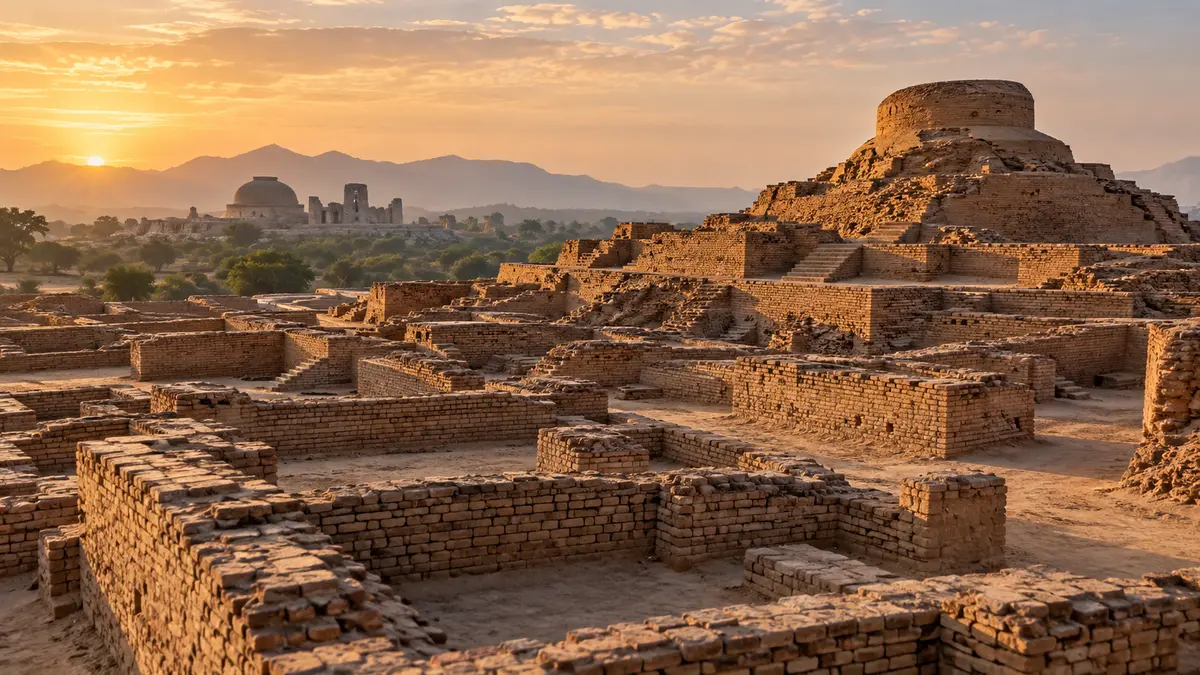
Gandhara Civilization: Taxila & the Doorway Into a Bigger World
Most people hear “Pakistan” and think of mountains, Mughal-era forts, food, hospitality, maybe a few headlines they’ve seen online. Very few people—especially outside South Asia—immediately think of Buddhism, ancient universities, or sculpture that quietly changed how an entire religion looks.
And that’s exactly what makes the Gandhara Civilization so surprising when you meet it in real life.
Because this story isn’t buried in books. It still sits out in the open—under the sun, on hillsides, behind museum glass, in courtyards where monks once walked in slow circles. It’s not loud. It doesn’t beg for attention. But the moment you understand what you’re looking at, it becomes hard to forget.
Who this guide is for
This guide is designed for two types of people: the heritage traveler who wants to feel history, not just tick off places, and the curious visitor who wants a clear, human explanation of why Gandhara matters, how Taxila fits into it, and what to see beyond the obvious.
Why Gandhara works as a journey
If you’re planning a trip, you’ll also notice something important as you read: Gandhara isn’t a “single monument” kind of destination. It works like a journey. A chain of places where each stop makes the next one make more sense.
How to make it meaningful
If you want this to land emotionally, not just academically, you’ll benefit from a route that’s paced well, and ideally from a guide who can translate “ruins” into meaning. The difference is huge.
The Snapshot
Gandhara Civilization in 60 Seconds
Gandhara was not just an ancient region. It was a cultural bridge where South Asia, Central Asia and the Mediterranean world met, mixed and created something globally influential.
Civilization Type
A long civilizational zone built on movement, learning, trade, Buddhism, art and cultural synthesis.
Main Pakistani Center
Taxila is one of the clearest expressions of Gandhara’s intellectual, urban and Buddhist heritage.
Global Importance
Gandhara helped shape Buddhist visual language, especially the human image of the Buddha.
Key Regions
Taxila, Pushkalavati, Peshawar, Swat, Bajaur, Dir and wider routes into Central Asia.
Best Visitor Flow
Start with a major stupa site, continue to a monastery, then visit the museum for emotional and historical context.
Best Tour Style
A paced heritage route works better than a rushed checklist because Gandhara reveals itself through connected sites.
Introduction – Why Gandhara Matters in World History
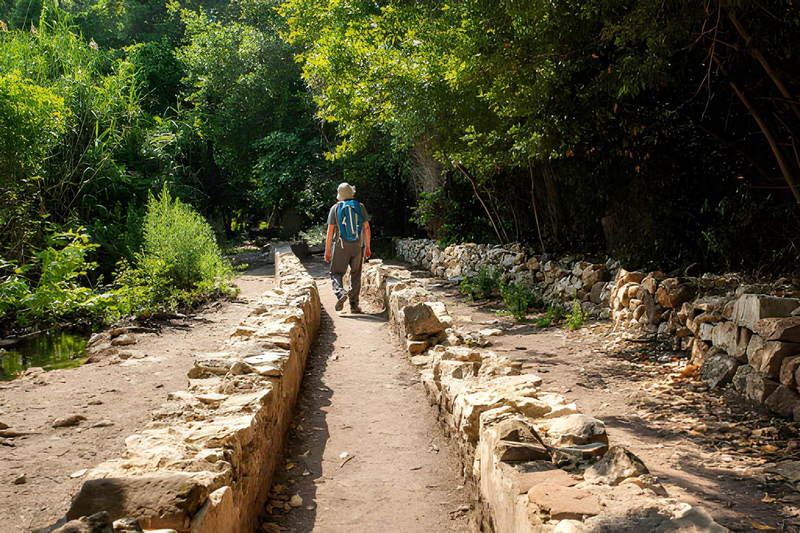
Gandhara as a cradle of civilization
The word “civilization” can feel overused, like it’s meant to impress. But Gandhara genuinely earns it.
This region supported organized urban life early, and it remained important because it was never isolated. Gandhara’s cities lived inside a moving world: shifting empires, trade routes, languages, faiths, art styles. Instead of shutting the door, Gandhara kept it open—and learned how to absorb without losing itself.
That’s why Gandhara produced something rare: not one clean identity, but a layered identity. A place where multiple worlds overlapped and somehow worked.
A bridge between South Asia, Central Asia & the Mediterranean
Look at Gandhara on a map and you immediately see why it became powerful: it sits near the corridors that connect the Indian subcontinent with Central Asia and the broader Eurasian world.
Trade caravans didn’t just carry silk, spices, and precious stones. They carried ideas about governance, new artistic techniques, religious philosophies, languages and scripts, and ways of seeing the human figure in art.
That’s how Gandhara became a cultural translator—one of the places where worlds met, mixed, and created something new.
Why Gandhara is central to Pakistan’s historical identity
Pakistan’s historical story is often told from later chapters: Islamic dynasties, Mughal architecture, colonial rule, modern statehood.
But Gandhara stretches the timeline back and reminds you of something deeper: this land has long been a center of learning and exchange.
Understanding Gandhara helps people see Pakistan not just as a crossroads of empires, but as a producer of civilization—an exporter of ideas, art, and spiritual culture.
Gandhara’s global importance in Buddhism & art
Even if you never study history formally, you’ve probably seen Buddhist imagery: the calm face, the robe folds, the narrative panels showing key moments of the Buddha’s life.
A significant part of that visual language traces back here.
Gandhara didn’t simply “practice Buddhism.” It helped Buddhism become portable and visible. It helped shape how Buddhism was taught to ordinary people—not just through words, but through art and architecture.
What Was the Gandhara Civilization?
The Gandhara Civilization refers to an ancient cultural and political region centered in what is now northern Pakistan, with extensions into eastern Afghanistan. It’s not a single empire. It’s a long civilizational zone that remained culturally coherent even when rulers changed.
So instead of thinking “Gandhara = one dynasty,” think: Gandhara = a civilization built on movement, learning, trade, and synthesis.
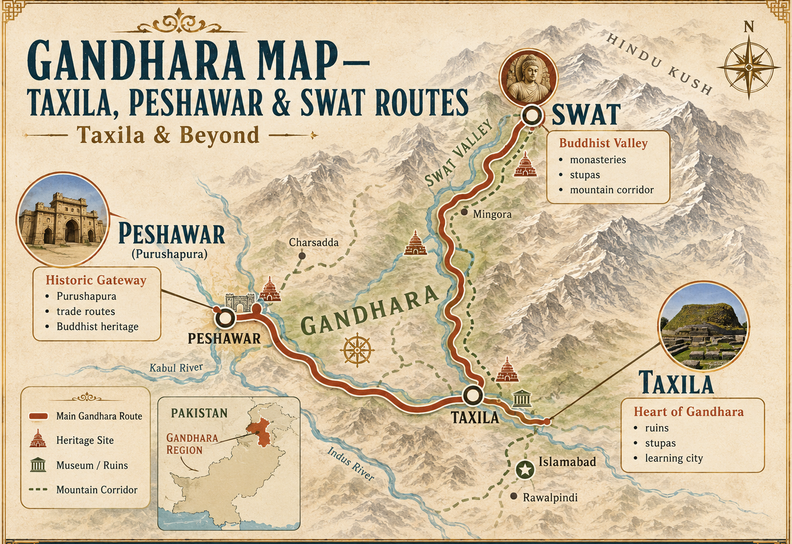
Geographic extent of Gandhara
Gandhara included fertile valleys, rivers, and strategic mountain passes. Those passes mattered because they shaped everything: economics, politics, and culture.
A place that controls movement becomes important. A place that attracts movement becomes influential.
Gandhara was both.
| Phase | What Happened | Why It Matters |
|---|---|---|
| Early settlement and urban growth | Communities developed around fertile land, water access and strategic corridors. | Gandhara’s importance began with geography and movement. |
| Persian administration | Achaemenid rule connected the region to imperial governance and trade systems. | Taxila and Gandhara became part of a wider administrative world. |
| Greek encounters | Alexander’s campaign and later Hellenistic influence accelerated cultural exchange. | Greek artistic ideas later shaped Gandharan art. |
| Mauryan expansion and Ashokan patronage | Buddhism gained support through state patronage, monasteries and stupas. | Gandhara became a strong Buddhist learning region. |
| Indo-Greek and Kushan flourishing | Trade, patronage, monastic institutions and artistic production expanded. | This was the peak of Gandhara’s synthesis and global influence. |
| Slow decline | Power shifted, trade routes changed, institutions weakened and populations moved. | Gandhara did not collapse suddenly; it gradually dimmed and transformed. |
Taxila: The Learning City That Still Feels Alive
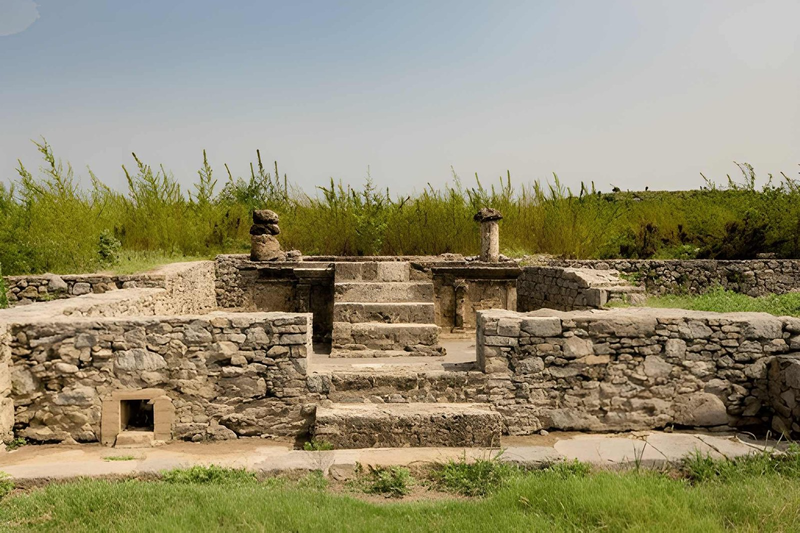
Taxila – Heart of Gandhara Civilization
Yes—fully. Taxila sits at the heart of the Gandhara world. If Gandhara is the broader civilization, Taxila is one of its clearest expressions: organized, curious, connected, and intellectually ambitious.
People call Taxila “the most famous Gandharan site” for a reason. But the deeper reason isn’t fame—it’s function.
Taxila wasn’t just a city where people lived. It was a city where people came to learn.
Why Taxila became the intellectual capital
Taxila attracted scholars, students, administrators, and travelers from far away. Not because it advertised itself, but because it offered something valuable: knowledge, structure, and debate.
It’s often called an early “university,” but it didn’t look like a modern campus. It functioned more like a network of learning communities—teachers and students living and studying across the city, connected through mentorship, debate culture, and specialized training.
Taxila’s reputation spread the way reputations spread in the ancient world: through people who left and carried the story with them.
Taxila as an ancient center of learning
Taxila’s learning wasn’t narrow. It wasn’t “only religion.” It included philosophy and ethics, governance and law, medicine, languages, administration, strategy and political thinking.
In modern terms, Taxila trained the minds that ran societies.
Was Taxila Buddhist?
At times, yes—strongly. Especially during the Mauryan and Kushan eras.
But Taxila wasn’t exclusive. It hosted multiple traditions, and that’s part of what made it powerful. Cities that allow different ideas to coexist often become magnets for thinkers.
History of Taxila — Told Like a Human Timeline
Taxila did not appear fully formed. Its story unfolded through settlement, empire, diplomacy, patronage, artistic fusion and eventual abandonment.
Early origins & prehistoric settlement
Taxila didn’t appear out of nowhere. Archaeological evidence suggests human activity here long before it became a “famous” city.
Why? Because the region offered what people have always looked for: fertile land, access to water, and a position near routes that connect major regions.
When you stand there today, it’s easy to forget how strategic this location was. But in the ancient world, location was destiny.
Taxila under Achaemenid rule
One of the earliest large empires to incorporate Taxila was the Persian Achaemenid Empire. This mattered because it brought a style of administration and connectivity that reinforced Taxila’s role as a regional center.
It introduced formal governance systems, integration into imperial trade networks, and a broader political structure that linked Gandhara to lands far west.
Even without dramatic monuments, this phase shaped Taxila’s “organized city” identity.
Alexander the Great and Taxila
When Alexander’s campaign reached this region, the response wasn’t only war. In Taxila’s case, diplomacy played a major role.
This moment is important not because it “changed everything overnight,” but because it accelerated exchange. Greek influence didn’t arrive only through conquest. It arrived through artistic ideas, political models and cultural contact.
And it left a lasting footprint on what Gandhara later became—especially in art.
Mauryan period & Ashokan influence
After Alexander, the Mauryan Empire took control, and this is where Buddhism begins to rise with state support.
Under Ashoka, Buddhism gained patronage. Monasteries and stupas were built. Missionaries traveled.
But the key point is this: Gandhara was already a learning region. Buddhism arrived in a place that respected study, discipline, and debate. That’s why it grew so strongly here.
Indo-Greek and Kushan eras
After the Mauryan period, Indo-Greek rulers and later the Kushans held power.
This is the era when Gandhara becomes internationally influential—not just regionally important.
The Kushans, in particular, supported trade across long-distance routes, monastic institutions, artistic commissions and urban stability.
When stability and wealth combine with learning, art often flourishes. That’s exactly what happened.
Decline and abandonment
Taxila didn’t collapse in a single dramatic event. It gradually declined due to political instability, invasions and disruptions, changes in trade routes, and shifts in economic centers.
Eventually, it was abandoned. But abandonment can preserve. That’s why ruins remain.
And that’s why Taxila today can feel strangely intimate: you’re not seeing a heavily rebuilt tourist attraction. You’re seeing a place that was left behind.
A Human Way to Experience Taxila Today
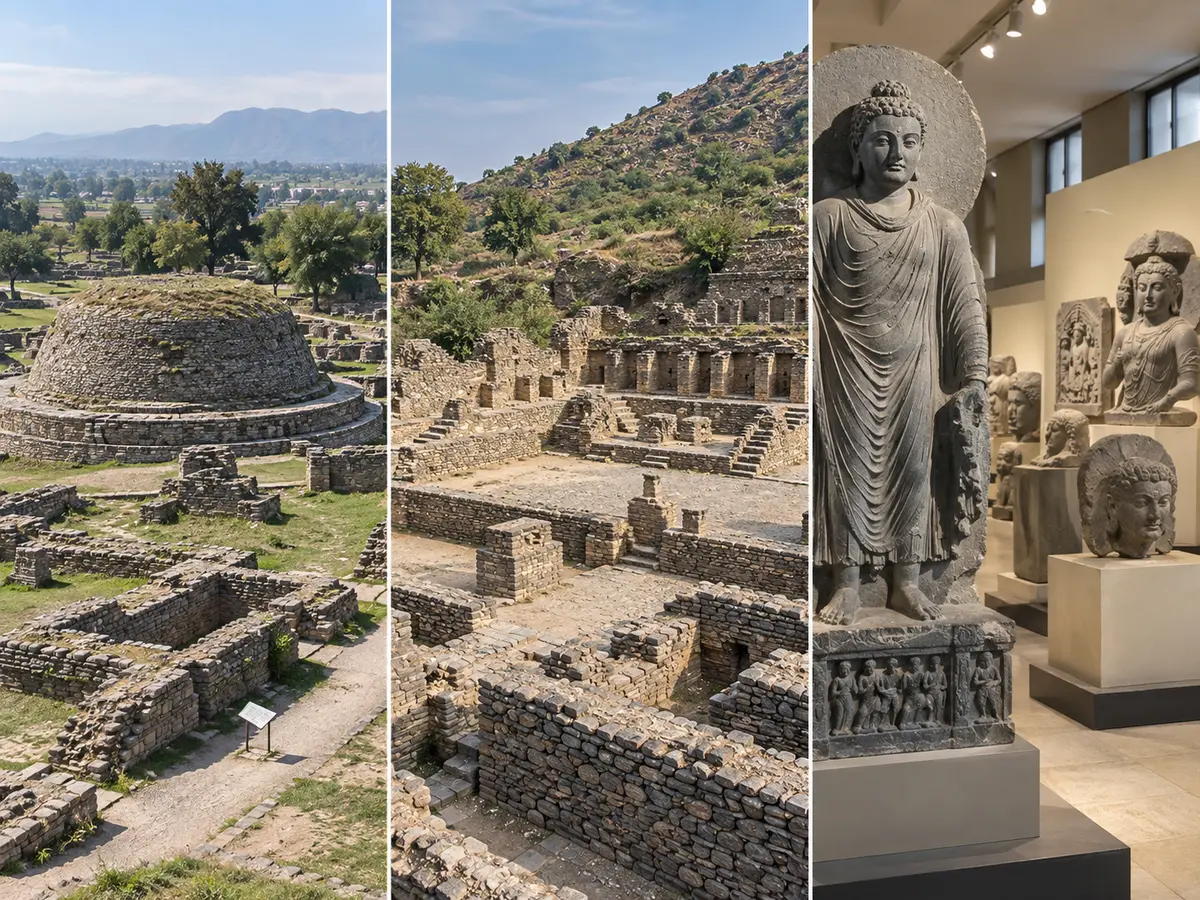
If you visit Taxila Pakistan, here’s what often happens: at first, many visitors see “old stones.” Then, slowly, they begin to notice patterns: the way spaces are organized, the quiet logic in layouts, the paths people would have walked daily, and the relationship between learning spaces and ritual spaces.
And then something shifts.
You stop seeing “ruins.” You start seeing routines. People. Lives.
The Gandhara Network: Cities, Capitals, and the Living Landscape
Gandhara wasn’t a single “capital city civilization.” It was a network—multiple centers connected by geography and movement.
Taxila is the intellectual heart, but not the whole story.
The Intellectual Heart
Taxila represents learning, debate, urban planning and the knowledge systems that made Gandhara influential.
Early Governance Hub
Pushkalavati, in the Charsadda region, was one of the earliest capitals and a strategic administrative center.
Imperial Face
Peshawar rose under the Kushans as a powerful capital linked to Buddhist patronage and trade.
Sacred Landscape
Swat Valley contained monasteries, stupas and meditation sites where landscape and spirituality worked together.
Northern Gateways
These frontier regions connected Gandhara to Central Asia through mountain corridors and long-distance routes.
Major Cities of the Gandhara Civilization
Pushkalavati (Charsadda region)
Pushkalavati was one of the earliest capitals of Gandhara. Its location near river systems made it strategically valuable for administration and trade.
It played a major role in early governance and remained culturally significant.
Peshawar (Purushapura)
Historically known as Purushapura, Peshawar rose to prominence under the Kushans.
For Gandhara, this mattered because it represented an imperial phase—Buddhism supported at scale, governance organized, wealth flowing through trade.
Swat Valley (Uddiyana)
Swat is often described as sacred Buddhist terrain rather than just a “city location.”
It contained monasteries, stupas, meditation sites. Many travelers describe Swat as a place where the landscape itself feels like part of the spiritual experience.
Bajaur & Dir regions
These regions mattered as connectors—frontier zones linking Gandhara to Central Asia.
When you understand that Gandhara’s power came from movement, you start seeing why these “in-between regions” mattered.
Capital of the Gandhara Civilization
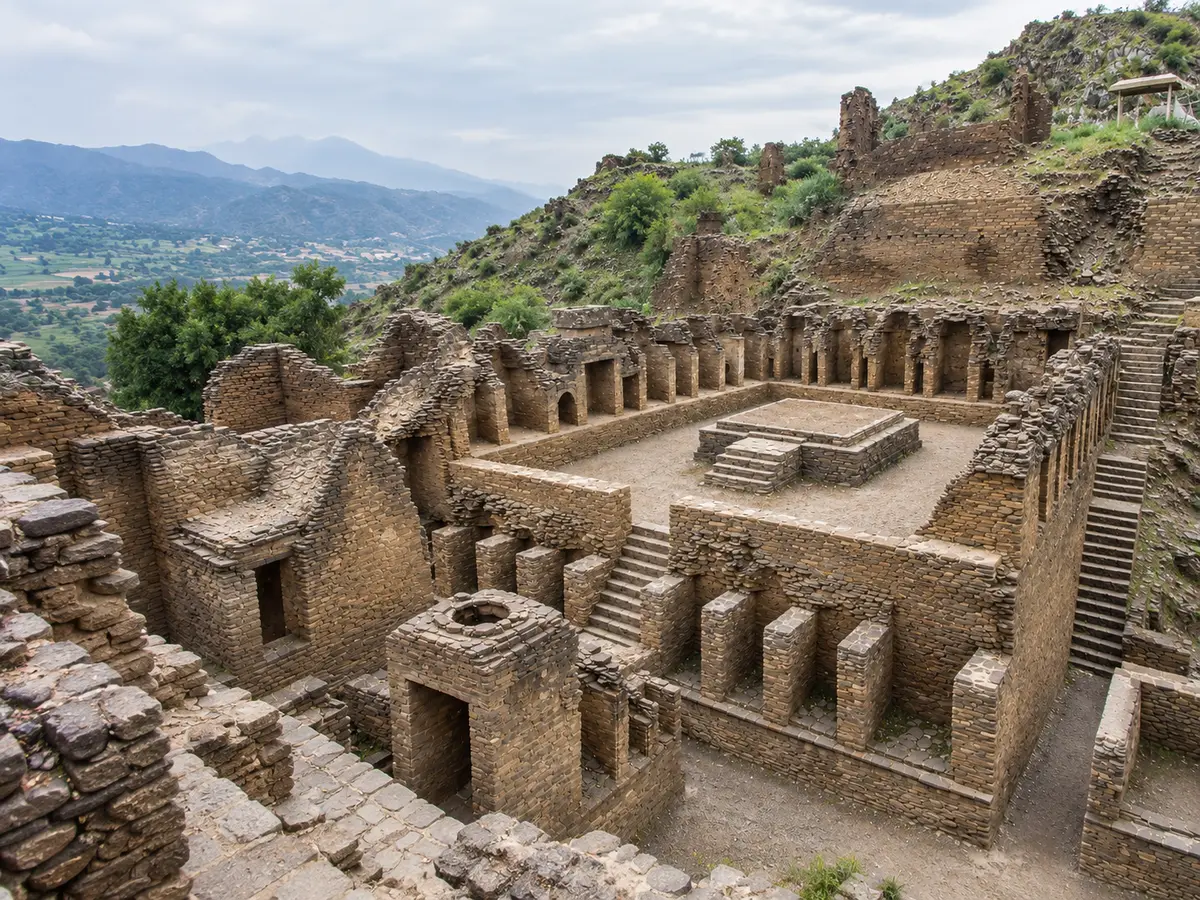
Was Taxila the capital?
Sometimes it was politically important, but it wasn’t always the political capital.
However, it remained a consistent intellectual center—which is often more influential long-term than political capital status.
Role of Pushkalavati
Pushkalavati served as an early administrative hub.
Purushapura under the Kushans
Under Kushan rule, Purushapura (Peshawar) became one of the most important capitals.
This shifting isn’t chaos—it’s adaptation. Gandhara re-centered itself as power and trade routes changed.
Political History of Gandhara — As a Lived Story, Not a List
Gandhara’s political story is a sequence of rulers who recognized a simple truth: this region mattered.
| Political Phase | What It Added | Historical Meaning |
|---|---|---|
| Achaemenid Persian rule | Governance and taxation systems stabilized the region. | Persians introduced structure and linked Gandhara to wider imperial systems. |
| Alexander’s arrival | Greek encounter and cultural exchange. | This later shaped Gandhara art and political imagination. |
| Mauryan rule & Ashoka | Buddhist patronage and institution-building. | Ashoka’s support helped institutionalize Buddhism. |
| Indo-Greek rulers | Deepened Hellenistic influence. | Greek ideas became part of Gandhara’s visual and cultural language. |
| Scytho-Parthian continuity | Trade networks and cultural life continued. | Gandhara remained connected and commercially active. |
| Kushan golden age | Trade, patronage, Buddhist institutions and artistic production flourished. | This was Gandhara’s peak. |
| White Huns and decline | Instability increased, routes changed and institutions weakened. | Gandhara gradually declined, but its legacy survived. |
The Gandhara Network: Cities That Worked Together, Not Alone
One of the most common misunderstandings about ancient civilizations is the idea that they revolve around a single capital city. Gandhara did not work like that. It functioned more like a networked system, where multiple cities and regions played specialized roles—administrative, spiritual, educational, and commercial.
Understanding this network is crucial, because it explains why Gandhara remained influential even as rulers changed.
Gandhara as a Civilization of Linked Cities
Instead of a rigid hierarchy, Gandhara operated as a distributed civilization. Some cities handled administration, others focused on learning and religion, others guarded trade corridors or mountain passes, and some became artistic and monastic hubs.
This decentralization made Gandhara resilient. When one city weakened, another could carry the torch.
That’s why Gandhara didn’t disappear overnight—it slowly transformed.
Taxila Revisited: The Brain of the System
Taxila wasn’t the largest city, nor always the political capital—but it was the intellectual engine.
Students came here, trained here, debated here, then left to serve elsewhere: as monks, administrators, teachers and advisors to rulers.
In modern terms, Taxila functioned like a top-tier knowledge hub feeding talent into the wider region.
When you walk through Sirkap city today—its carefully laid streets, residential blocks, and religious structures—you begin to see how deliberately planned this place was. This wasn’t accidental urban growth, this was the design.
Pushkalavati: Where Governance Took Shape
Pushkalavati, near today’s Charsadda, was one of the earliest capitals of Gandhara. Its importance lay in control and coordination.
Situated near rivers and fertile plains, Pushkalavati managed agricultural surplus, controlled movement between plains and hills, and served as a governance anchor in early periods.
While Taxila produced thinkers, Pushkalavati ensured systems ran. This division of labor between cities is one of the reasons Gandhara scaled successfully.
Purushapura: The Imperial Face of Gandhara
When the Kushans rose to power, they needed a city that reflected imperial authority. Purushapura (modern Peshawar) became that city.
Here, Gandhara presented itself as wealthy, cosmopolitan, deeply Buddhist, and internationally connected.
Under Kushan patronage, Peshawar saw monumental architecture, large stupas, increased artistic production, diplomatic and trade activity.
If Taxila was Gandhara’s classroom, Peshawar was its showcase.
Swat, Bajaur, Dir & the Living Landscape
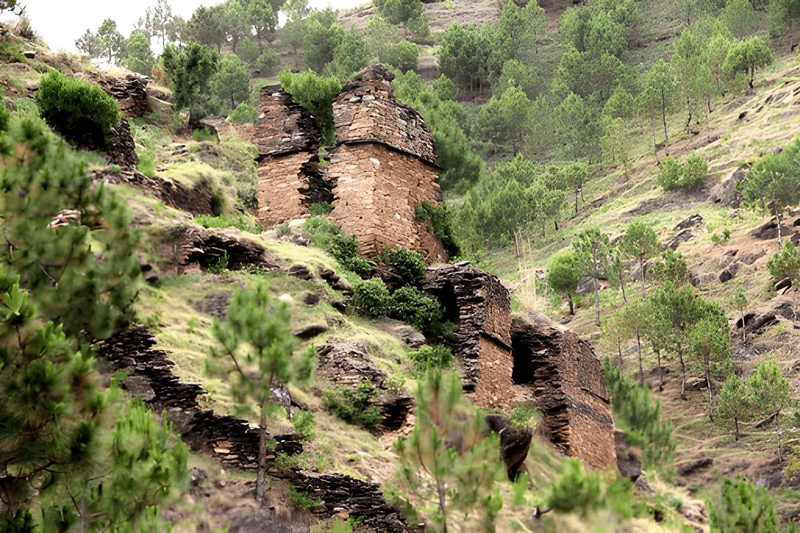
Swat Valley (Uddiyana): The Sacred Landscape
Swat wasn’t just another city-region. It was something different: a spiritual geography.
Ancient Buddhist texts describe Uddiyana as a place of intense spiritual practice, advanced meditation traditions and monastic retreat.
The landscape mattered. Mountains, rivers, and valleys weren’t backdrops—they were part of the spiritual experience.
Even today, visitors often say Swat feels different. That sensation isn’t imaginary. It’s the residue of centuries of spiritual use.
Bajaur, Dir & the Northern Frontiers
These regions rarely get headline attention, but they were essential.
They connected Gandhara to Central Asia, guarded mountain corridors, and facilitated long-distance trade and monk travel.
When monks moved northward toward Central Asia and China, these were the gateways they passed through.
Gandhara didn’t end at its cities. It extended along its routes.
Why This Network Model Matters Today
For travelers, this means something important: Gandhara is not a single-stop destination.
If you only visit one site, you’ll see history. If you visit the network, you’ll understand it.
That’s why the most successful heritage itineraries combine Taxila with at least one additional Gandharan region, show contrast between urban learning, spiritual retreat and imperial center, and allow time between sites for reflection, not rushing.
Buddhism in Gandhara: How a Teaching Became a Visible World
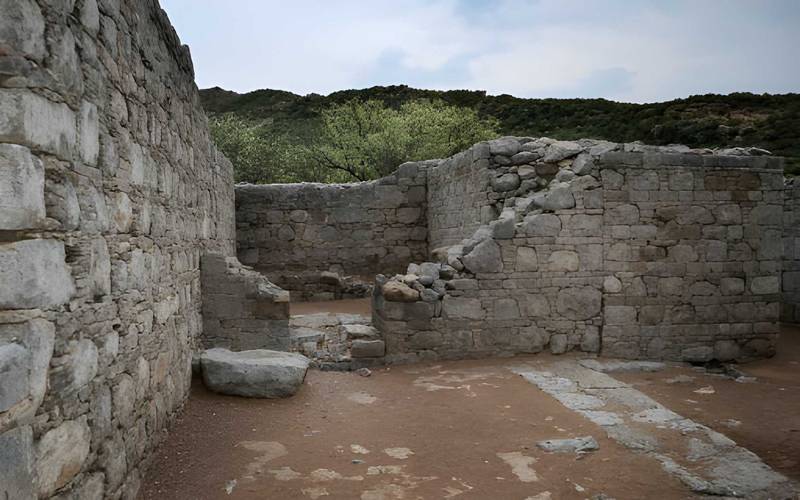
Rise of Buddhism in Gandhara
People often ask: “Did Buddha live here?” No. But here’s the more important question: “Did Buddhism become globally recognizable here?” In many ways, yes.
It expanded strongly under Ashoka and later flourished under stable, wealthy rule—especially the Kushans.
Monasteries weren’t only spiritual retreats. They were education centers. They trained monks, copied texts, hosted debate, welcomed pilgrims.
That institutional strength is one reason Buddhism could travel far without losing structure.
Monks traveled along the same routes as traders. Gandhara was positioned perfectly to become a launchpad into Central Asia and China.
When people search Buddha in Pakistan, they often expect a simple yes/no answer. The real answer is deeper: the Buddha is present here through the heritage that shaped how the Buddha is remembered.
Gandharan Art – The Greco-Buddhist Legacy
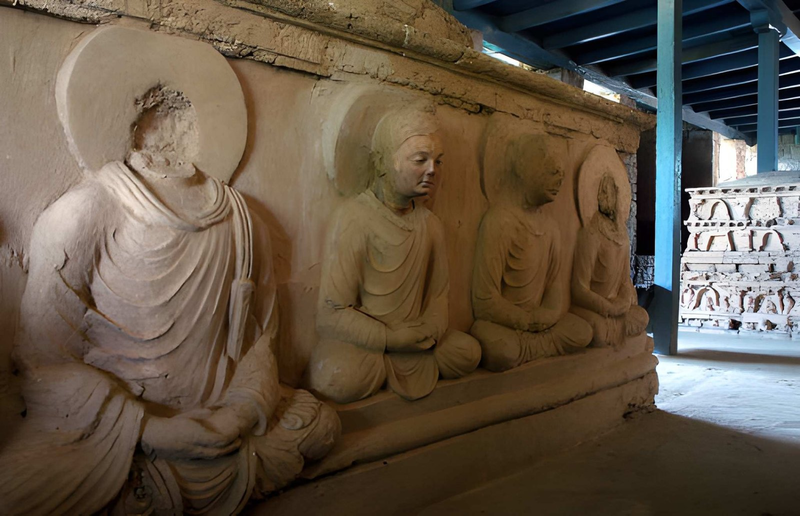
What is Gandharan art?
Gandharan art refers to the Buddhist sculpture and narrative tradition that flourished in Gandhara—often carved in stone, often deeply human in expression.
This art feels different because it blends traditions.
Greco-Buddhist fusion explained
Greco Buddhist art emerged because Gandhara didn’t resist influence. It absorbed and reshaped it.
Greek realism—especially naturalistic anatomy, robe folds and drapery, proportion and facial structure, narrative composition—was applied to Buddhist themes.
The result was a new visual language that helped Buddhism travel.
Why Gandhara was first to depict Buddha in human form
Earlier representations were often symbolic. Gandhara helped popularize Buddha as a human figure—serene, composed, accessible.
That innovation spread widely and shaped Buddhist imagery across Asia.
Influence of Greek, Roman & Persian styles
Gandhara borrowed and synthesized Greek realism, Roman narrative structuring, and Persian decorative sensibilities.
And then it made something uniquely its own.
The Gandhara School of Art
The Gandhara School of Art became recognizable because it was consistent.
Key traits included naturalistic proportions, flowing drapery, narrative reliefs showing scenes from Buddha’s life, and emotional restraint rather than dramatic exaggeration.
These qualities made Gandharan sculptures ideal teaching tools. You didn’t need to read to understand the story. You could see it.
Comparison With the Mathura School
While Gandhara emphasized realism, the Mathura School leaned into indigenous symbolism and abstraction.
Together, they represent two complementary approaches: Gandhara as realism and narrative, Mathura as symbolism and spiritual abstraction.
Understanding both helps visitors see how diverse early Buddhist expression really was.
Architecture That Supported Learning
Gandharan monasteries weren’t decorative—they were functional.
Courtyards encouraged movement and discussion. Cells promoted discipline. Stupas anchored devotion.
The architecture served behavior.
Gandharan Architecture
Architecture supported monastic life: courtyards, cells, meditation halls, stupas as devotion centers.
The layouts were practical but meaningful. These weren’t random buildings. They were spaces designed for discipline, learning, and ritual.
Buddhism in Gandhara: How a Teaching Became a Living Culture
Buddhism existed before Gandhara—but Gandhara changed how Buddhism lived in the world.
It turned a philosophy into institutions, architecture, visual storytelling, and an exportable tradition.
And that transformation happened slowly, deliberately, and deeply.
Why Buddhism Flourished Here
Buddhism resonated in Gandhara because the region already valued discipline, debate, education and ethical systems.
When Ashoka supported Buddhism, he wasn’t introducing it to a hostile environment. He was planting it in soil that was already prepared.
Monasteries as Knowledge Engines
Gandharan monasteries were not silent retreats in the modern sense.
They were schools, libraries, debate halls and training centers.
Monks studied texts, argued interpretations, learned languages, and trained for travel.
This is why Gandhara became a missionary hub.
How Buddhism Traveled From Gandhara
Monks didn’t travel randomly. They followed trade routes north into Central Asia, east toward China, and later into Korea and Japan.
They carried scriptures, monastic rules and artistic models.
This last point is crucial. People often understand ideas faster through images than through texts. Gandharan art made Buddhism visually understandable.
Gandharan Art: Why It Still Feels Human
When you stand in front of a Gandharan Buddha sculpture, something feels different.
The face is calm, but not distant. The posture is composed, but not rigid. The robe folds feel heavy, realistic, and human.
That’s because Gandharan artists borrowed realism from Greek traditions and applied it to Buddhist themes.
This wasn't an imitation. It was a translation.
Why Gandhara Depicted the Buddha as Human
Before Gandhara, Buddha was often represented symbolically: footprints, an empty throne, or a tree.
Gandharan artists made a bold move: they gave Buddha a body.
This didn’t make Buddhism less spiritual. It made it relatable.
And that decision shaped Buddhist art across Asia for centuries.
Archaeology, Visiting Today, and Turning Knowledge Into Experience
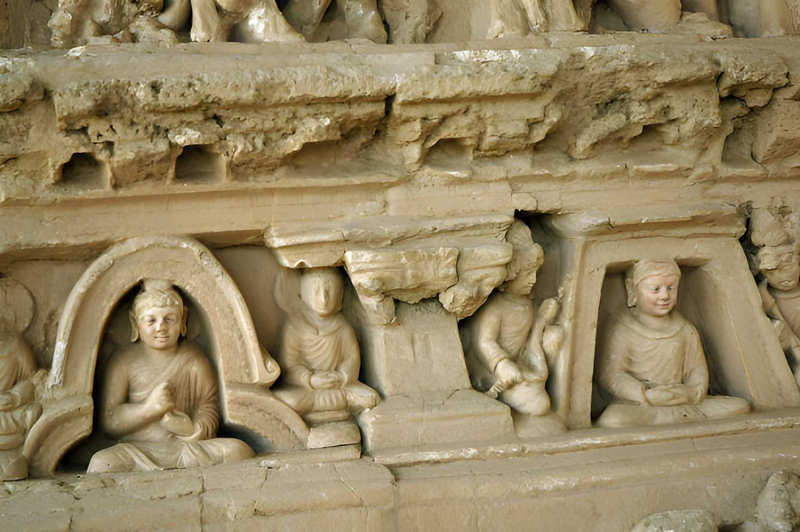
Archaeology of Gandhara
Taxila city is one of the most extensively excavated ancient urban sites in South Asia.
Its layers reveal multiple settlement shifts over time, showing how the city evolved rather than staying static.
Local communities always knew “old places” existed, but systematic excavation and academic attention, especially during colonial-era archaeology, brought Taxila into global scholarship.
Gandhara Beyond Taxila
Swat Valley as Uddiyana
Swat is not just scenic—it’s historically sacred terrain with layers of Buddhist heritage.
Rock art along routes
Carvings and inscriptions act like footprints left by travelers.
Afghanistan connection
Gandhara’s cultural sphere extended beyond modern borders, reinforcing its international character.
Preservation challenges today
Sites face erosion, urban pressure, and conservation limitations. Respectful tourism matters. So does good route planning that avoids unnecessary strain on fragile areas.
Decline of the Gandhara Civilization
Gandhara declined through accumulated pressures: instability, invasions, trade-route shifts, institutional weakening and religious transitions.
But decline didn’t erase legacy.
Legacy of Gandhara Civilization
Gandhara remains globally important because it represents cultural exchange over isolation, education and institutions that outlived rulers, and art that shaped how Buddhism looks worldwide.
Decline Without Erasure
Gandhara declined due to invasions, trade-route shifts, political instability and religious transformation.
But decline is not failure.
Gandhara succeeded in what many civilizations don’t: its ideas outlived its cities.
Archaeology, Modern Visits & Turning Knowledge Into Experience
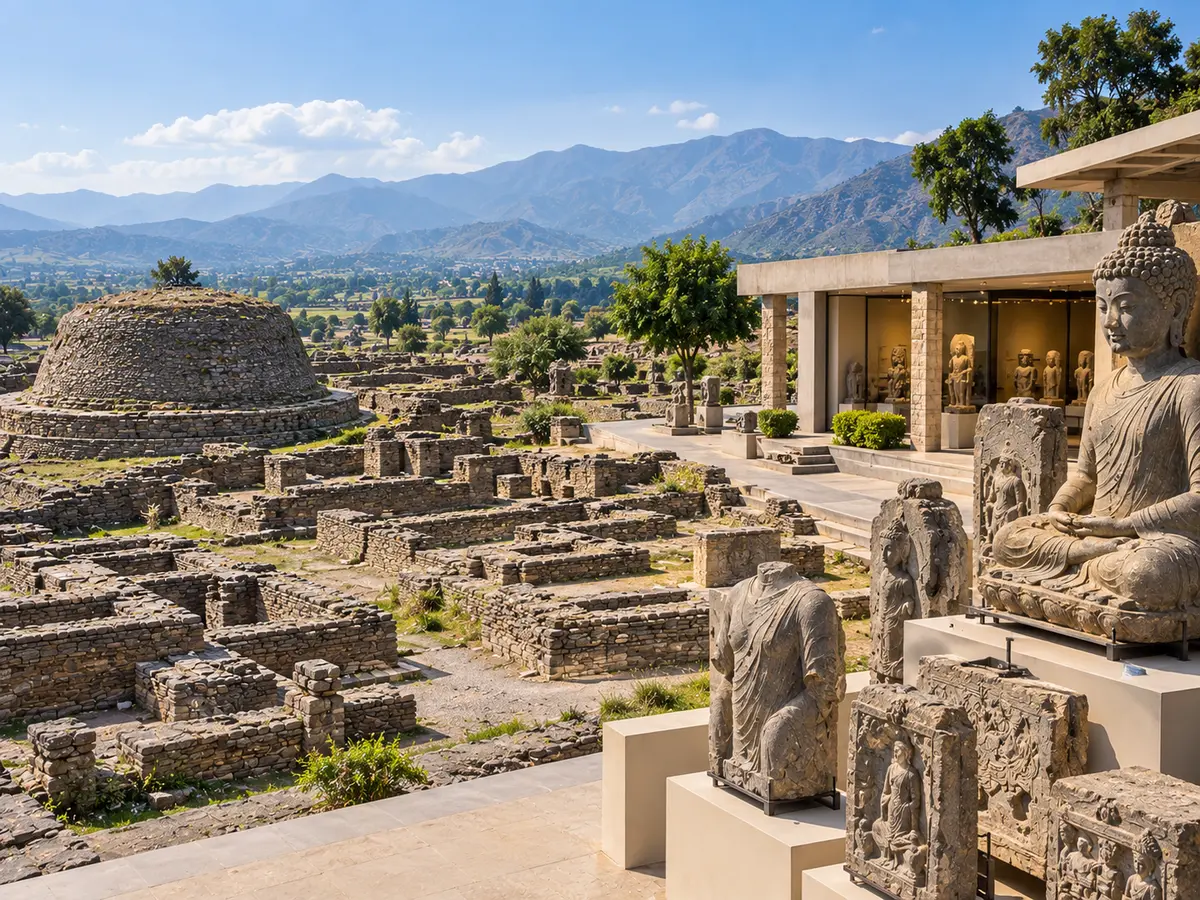
Archaeology: How Gandhara Was Rediscovered
For centuries, Gandhara existed mainly in texts and local memory. Archaeology changed that.
Systematic excavations revealed urban layouts, monastic complexes, sculpture workshops and trade-related artifacts.
Suddenly, Gandhara wasn’t theoretical. It was tangible.
Excavation of Taxila: A Layered City
Taxila is especially valuable because it shows urban movement.
Instead of one fixed city, Taxila shifted locations over time: older settlements abandoned, new ones established nearby.
This pattern tells us something deeply human: cities move when priorities change.
The Role and Limits of Colonial Archaeology
British-era archaeology documented Gandhara extensively, but it also removed artifacts, separated objects from context, and framed Gandhara through a colonial lens.
Today, there’s growing emphasis on local preservation, contextual interpretation and community involvement.
Which is good—for both heritage and visitors.
Why the Museum Visit Is Non-Negotiable
Many visitors rush ruins and skip museums. In Gandhara, that’s a mistake.
Taxila Museum provides chronological clarity, artistic comparison and emotional connection.
Seeing multiple Buddha faces side by side—each slightly different—reminds you that these were handmade, human creations.
Gandhara Beyond Pakistan
Gandhara’s cultural sphere extended into what is now Afghanistan.
Shared art styles, religious institutions and trade networks reinforce Gandhara’s identity as civilizational, not nationalistic.
Suggested High-Converting Itinerary Blocks
If this page is meant to sell, these sections convert well because they turn complex heritage into understandable travel choices.
Taxila Half-Day Immersion
This short route is ideal for travelers with limited time who still want Taxila to feel meaningful rather than rushed.
It can include Taxila Museum, Sirkap and Dharmarajika Stupa.
Best for short stays, Islamabad-based travelers and visitors who want a powerful introduction without committing multiple days.
Gandhara Core Circuit
This route gives a stronger sense of the Gandhara network by connecting Taxila with Takht-i-Bahi and Peshawar Museum.
It is the best balance of depth and comfort because it combines urban learning, monastic architecture and museum interpretation.
Buddhist Heritage Journey
This longer journey combines the Gandhara core with Swat Valley and northern monastic sites where seasonally appropriate.
It has high emotional impact, especially for Buddhist travelers, because it connects the origin of familiar imagery with landscapes, monasteries and museum collections.
Recommended Gandhara & Heritage Tours in Pakistan
These routes are best suited for travelers who want Gandhara to become a lived heritage journey instead of a disconnected museum stop.
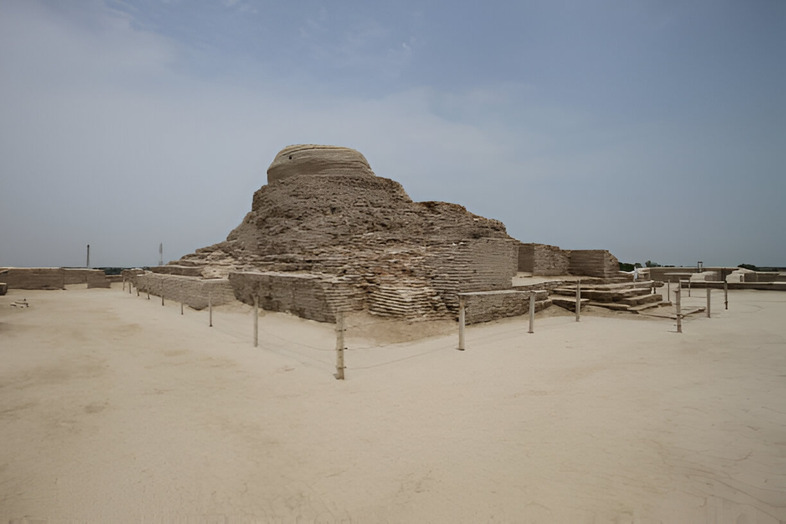
Buddhist Pilgrimage Tour to Pakistan
A focused heritage route for travelers interested in Taxila, Gandhara Civilization, Buddhist learning centers, monastic ruins and sacred historical context.
View Tour →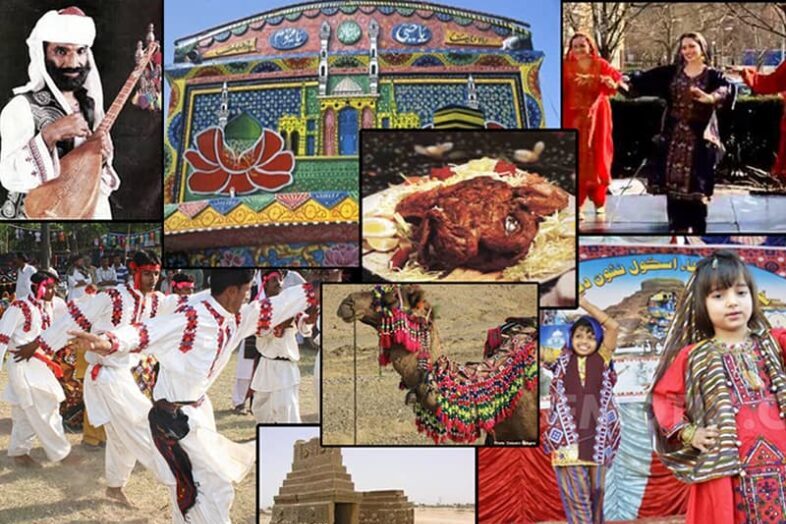
27 Day All Pakistan Tour – From Mountains to Metropolises
A wider national route for travelers who want Pakistan’s civilizations, cities, architecture, cultural regions and heritage sites in one complete journey.
View Tour →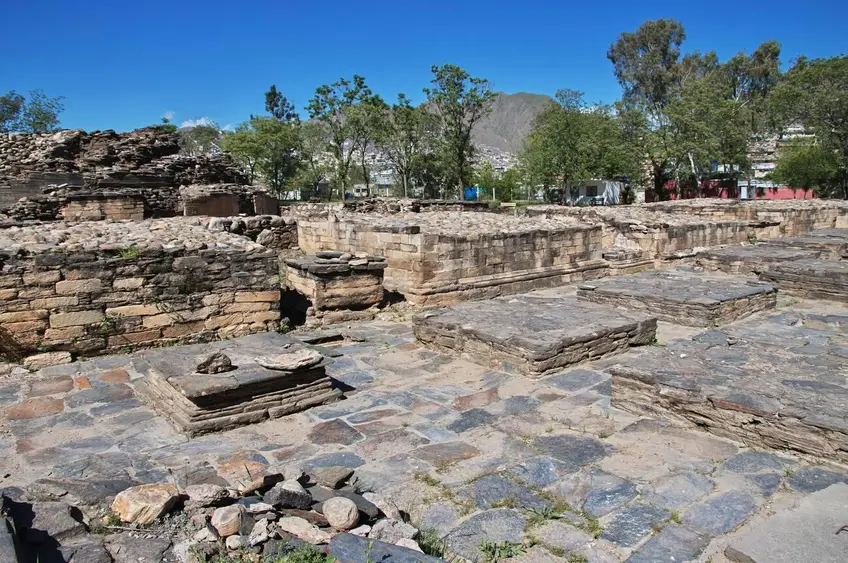
Customize a Pakistan Heritage Tour
Build a private heritage route around Taxila, Takht-i-Bahi, Peshawar Museum, Lahore, Swat or wider cultural destinations.
Customize Tour →FAQs
Is Taxila part of Gandhara?
Yes. Taxila was one of Gandhara’s most important centers and is widely considered its intellectual heart.
What was Gandhara famous for?
Gandhara was famous for Buddhist learning networks, trade-route influence, and especially Gandharan art that shaped Buddhist imagery across Asia.
Which city was the capital of Gandhara?
It changed across dynasties. Pushkalavati and Purushapura served as political capitals in different eras.
Was Taxila Buddhist?
Taxila was strongly associated with Buddhism in key periods, but it hosted multiple traditions, reflecting Gandhara’s pluralistic identity.
Final Takeaway: Gandhara Is Not Just a Past Civilization
Gandhara matters because it proves that Pakistan’s heritage is not limited to one era, one faith, one empire or one visual identity. It is a story of contact, learning and translation.
Taxila shows the intellectual power of the region. Peshawar and Purushapura show its imperial scale. Swat shows its spiritual landscape. Takht-i-Bahi and monastic sites show its disciplined religious architecture. Gandharan art shows how a teaching became visible, human and portable.
The most important thing to understand is this: Gandhara did not simply receive influence. It transformed influence into something new.
That is why its legacy still matters today. Its cities declined, but its ideas traveled. Its monasteries fell silent, but its art reshaped Buddhist imagery across Asia. Its ruins may look quiet now, but they are still speaking — if you know how to listen.
Plan a Gandhara Heritage Journey With Local Experts
Gandhara becomes powerful when Taxila, monasteries, museums, Buddhist art and ancient routes are connected into one meaningful story. A well-paced heritage route turns ruins into people, places and memory.
